Material

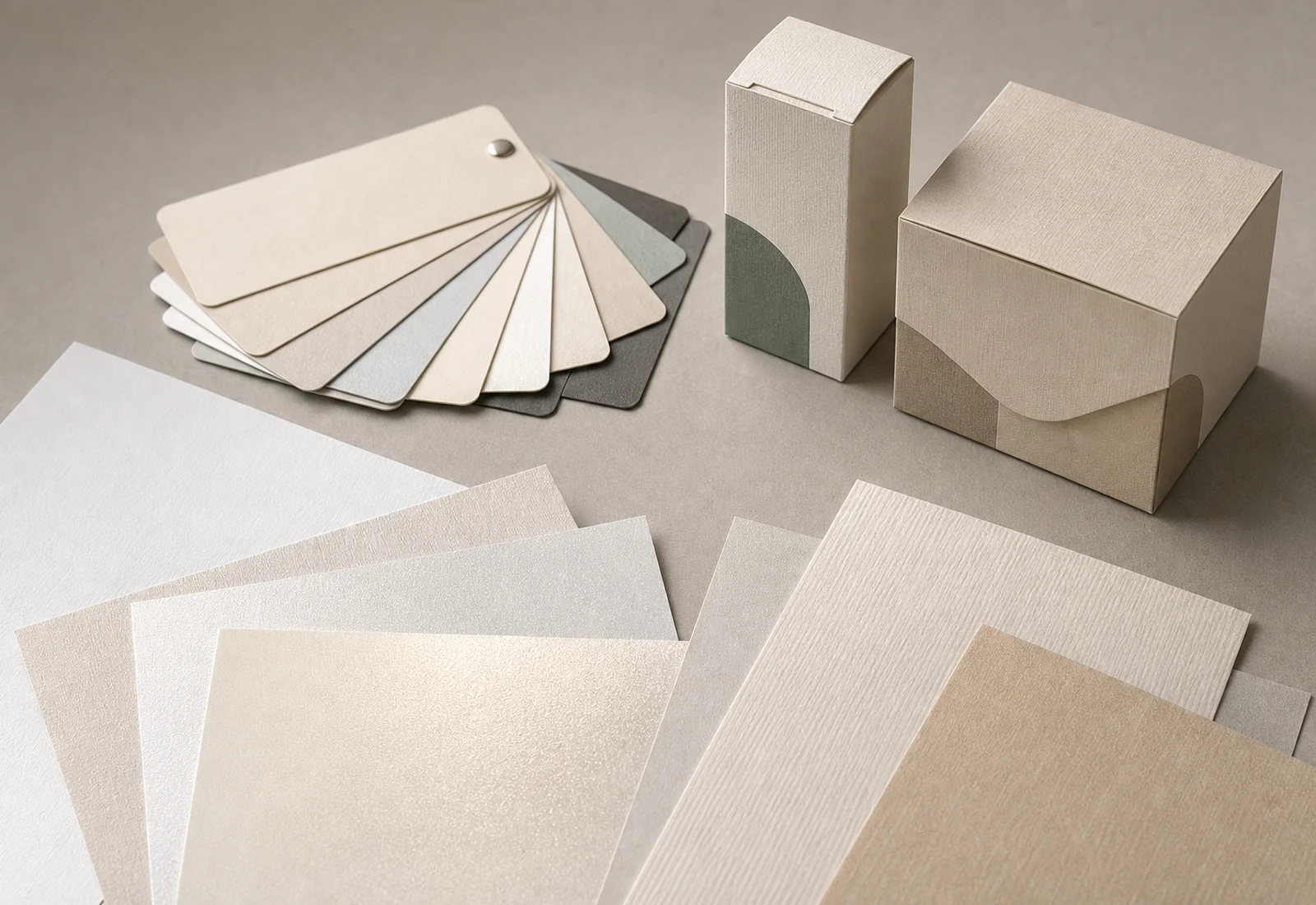
Specialty paper

Textured, colored, pearl, or tactile paper for distinctive brand presentation.

Specialty paper swatches with textured, pearlescent, and colored paper packaging samples
Use

When to use it

  • The packaging needs a more distinctive surface than standard white or kraft board.
  • Tactile feel, color, or subtle texture is part of the brand presentation.
  • The project can support sample review before confirming mass production.
Avoid

When not to use it

  • Exact photographic print quality is the main priority and the surface has not been tested.
  • The buyer needs the lowest-cost paperboard direction.
  • The finish combination has not been sampled on the actual paper surface.
Options

Common options

  • Textured paper for premium wraps, sleeves, rigid boxes, or inserts.
  • Colored paper when the base color is part of the brand system.
  • Pearl, metallic, or tactile papers when a distinctive retail feel is required.
Fit

Compatibility notes

  • Often considered for rigid boxes, sleeves, drawer boxes, paper tubes, and hang tags.
  • Pantone, foil, embossing, debossing, and soft touch finishes should be tested on the chosen surface.
  • CMYK artwork may shift on colored or textured papers, so proofing is recommended.
Cost

Cost and MOQ drivers

  • Paper type, color, texture, availability, and waste allowance.
  • Print method, color control, and whether the paper surface needs special handling.
  • Finish combination, sample rounds, and manual wrapping or assembly steps.
  • Order quantity, import/export packing plan, and lead-time sensitivity.
Quote

What to prepare for quote

  • Target look or reference paper sample.
  • Packaging structure and surface area to be wrapped or printed.
  • Artwork, color references, and finish expectations.
  • Quantity range, sample needs, and destination country.

Request a quote that includes specialty paper

Share product dimensions, structure, quantity, artwork, and destination — we'll send a focused pricing direction.