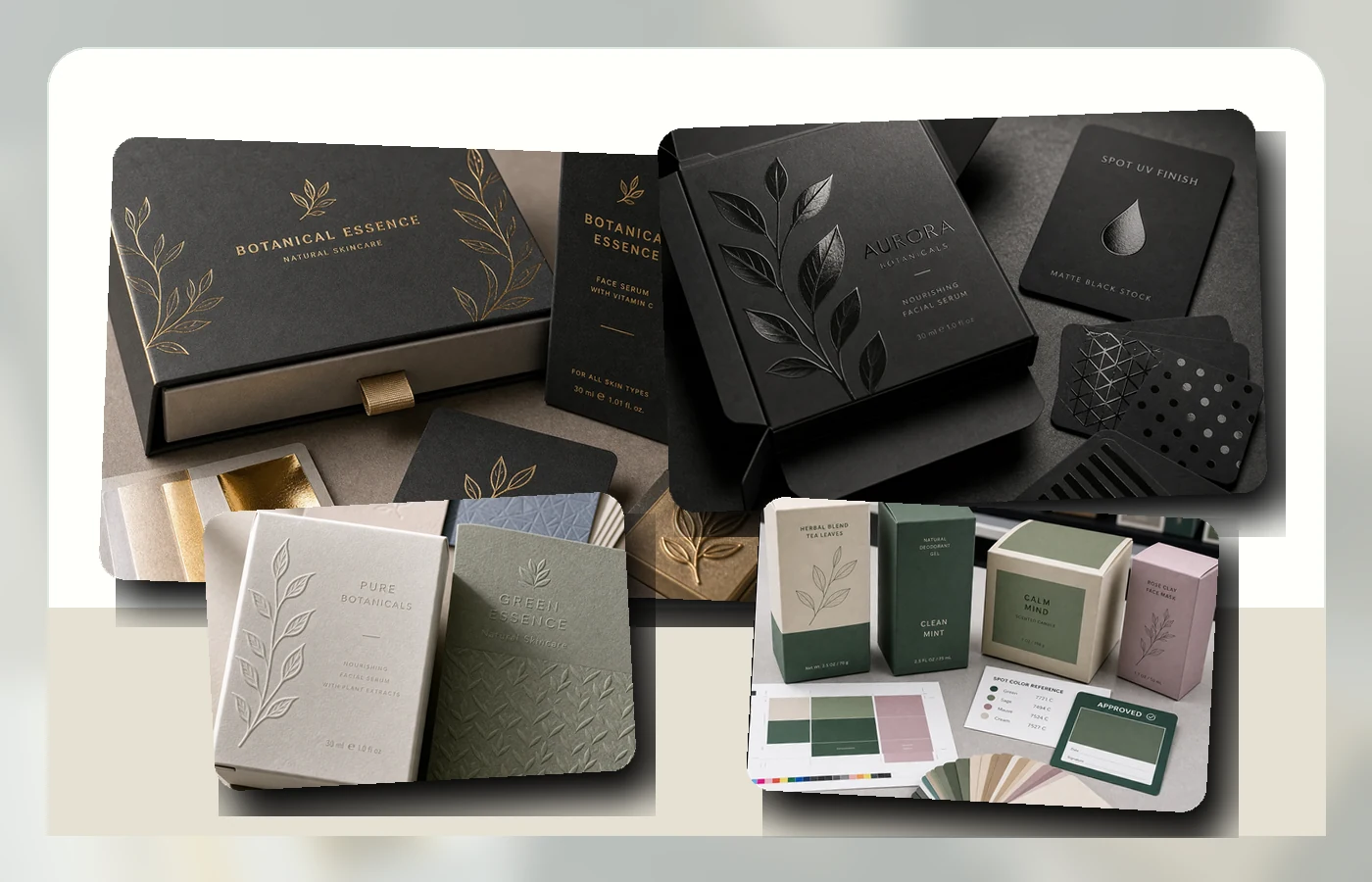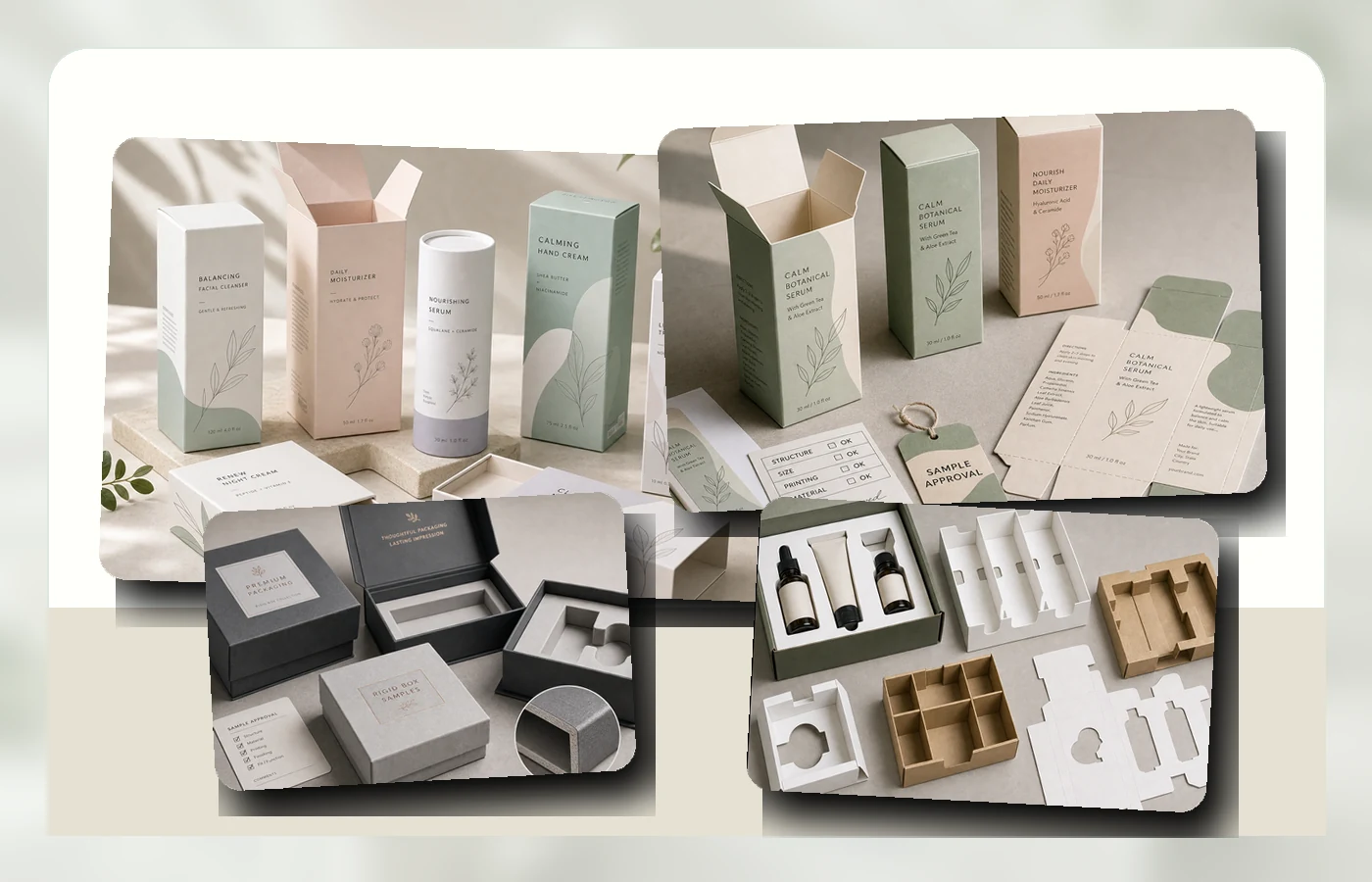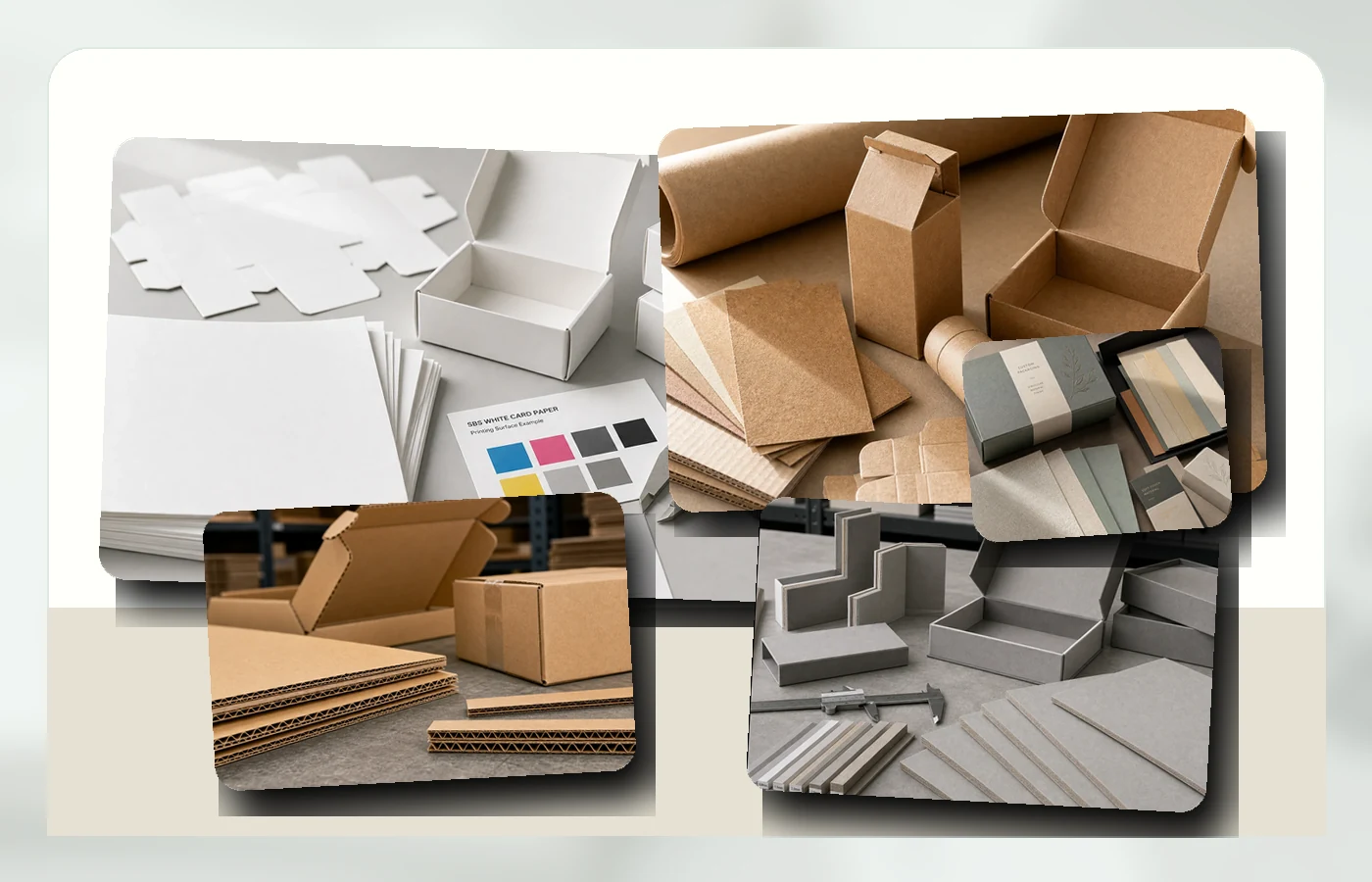
White card paper
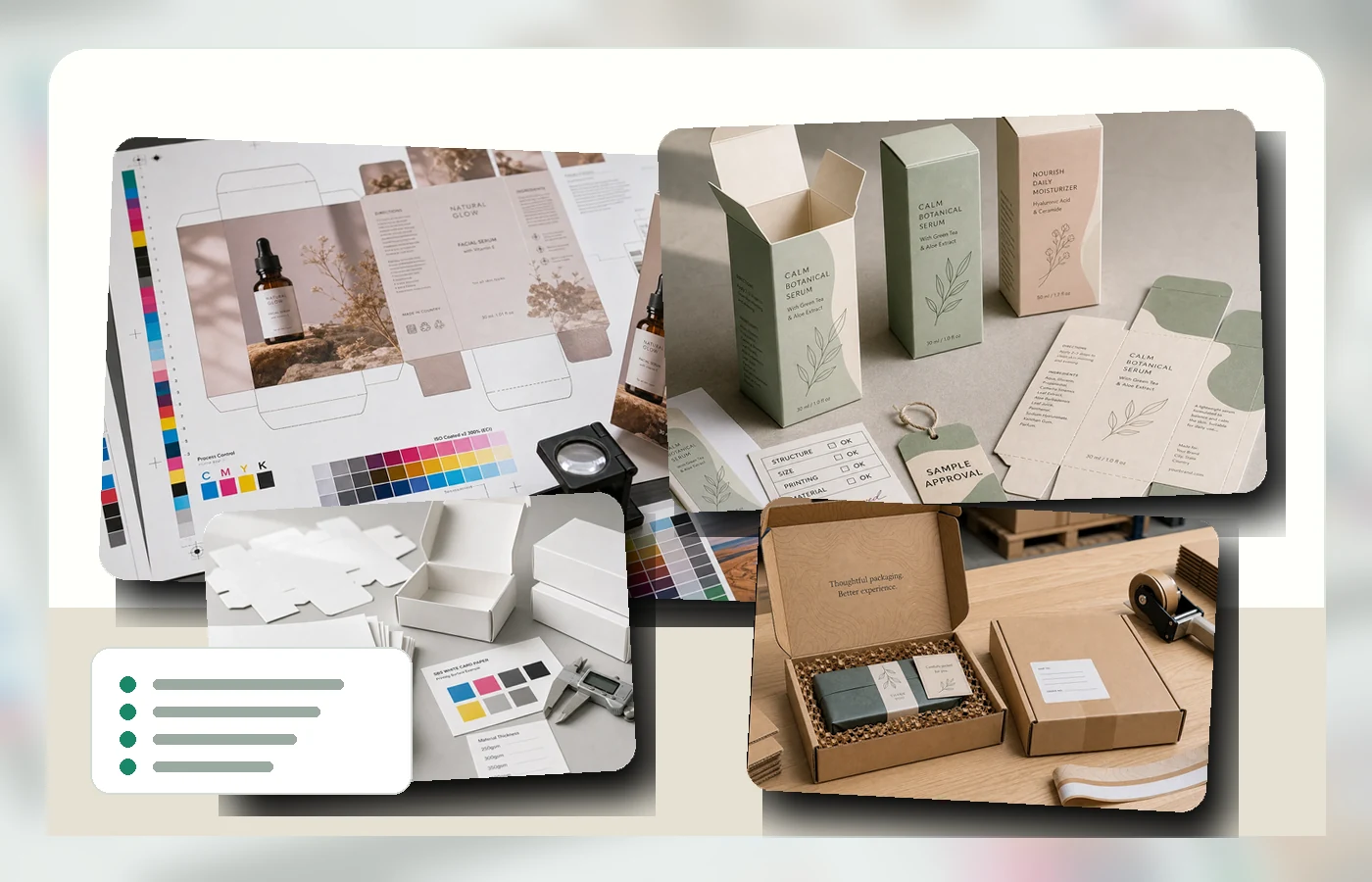
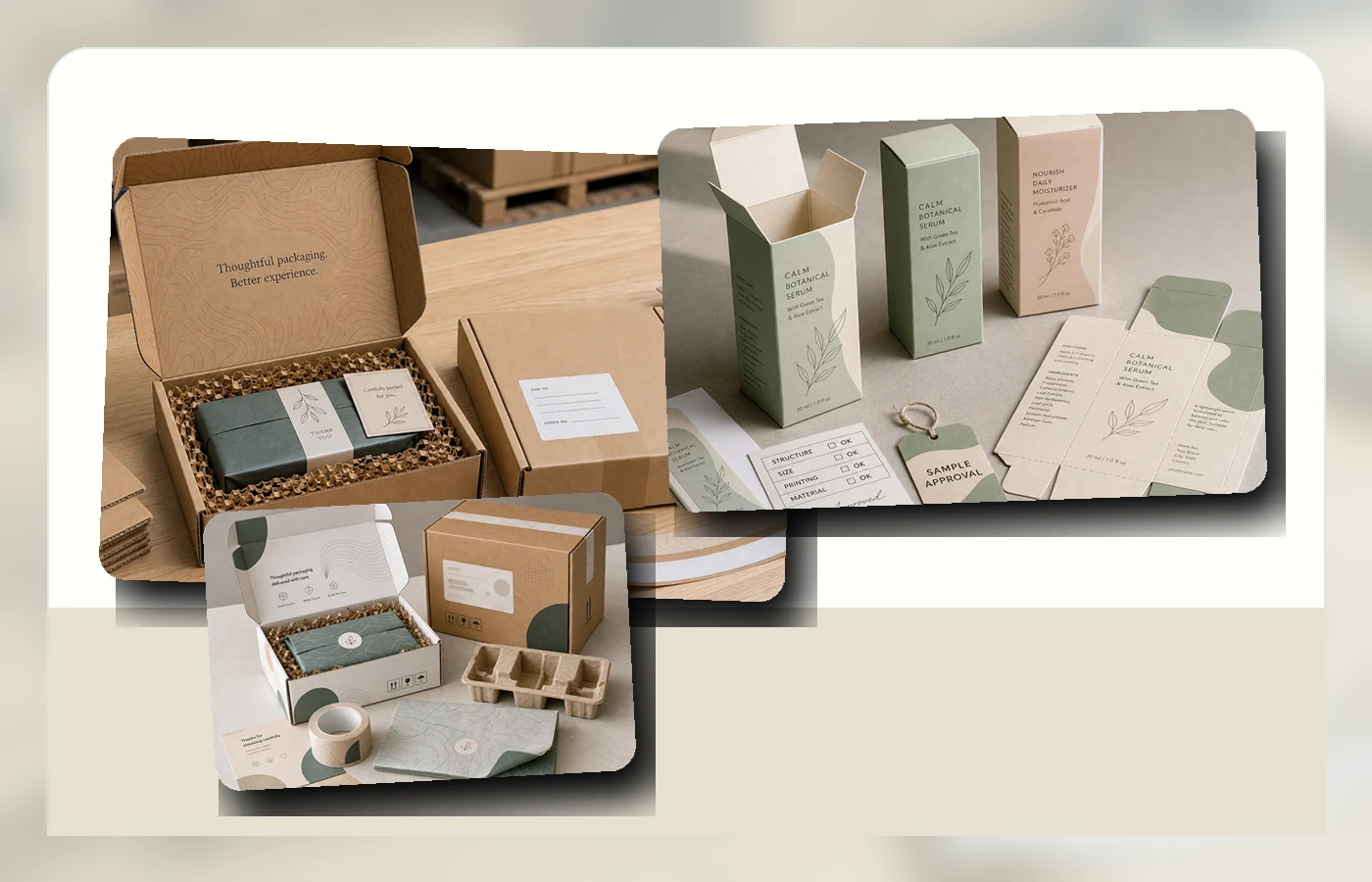
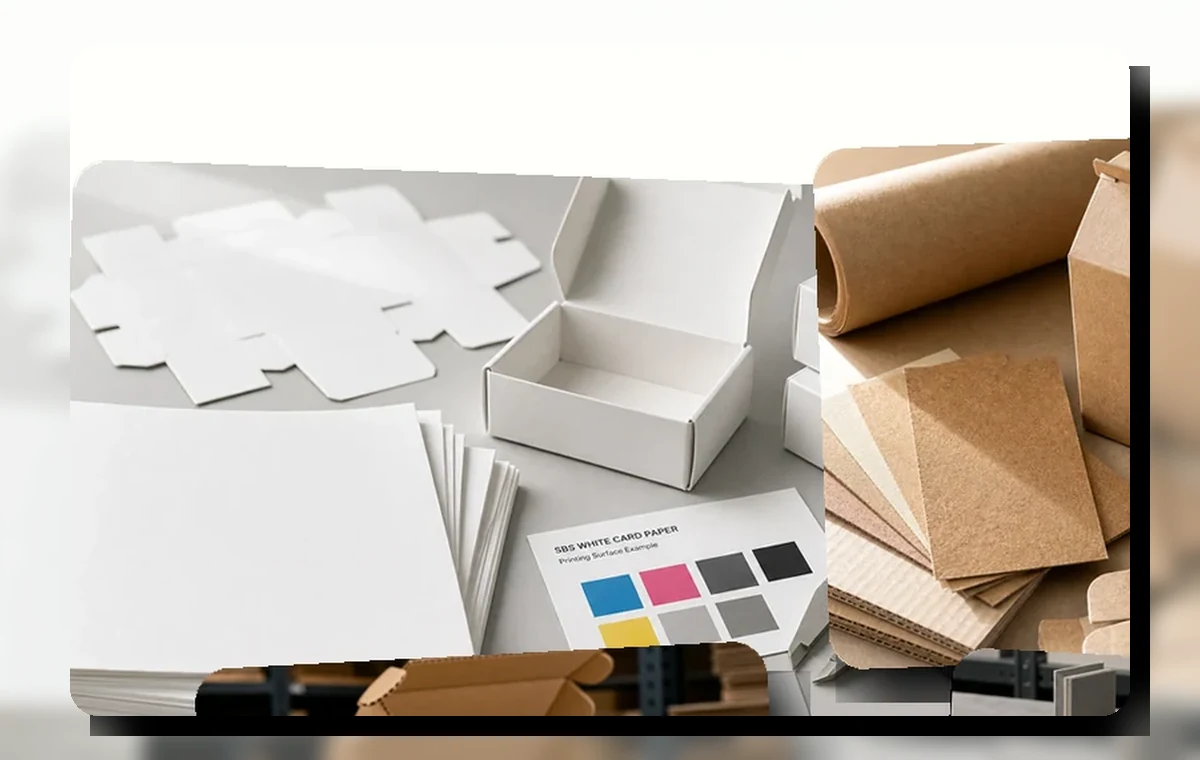
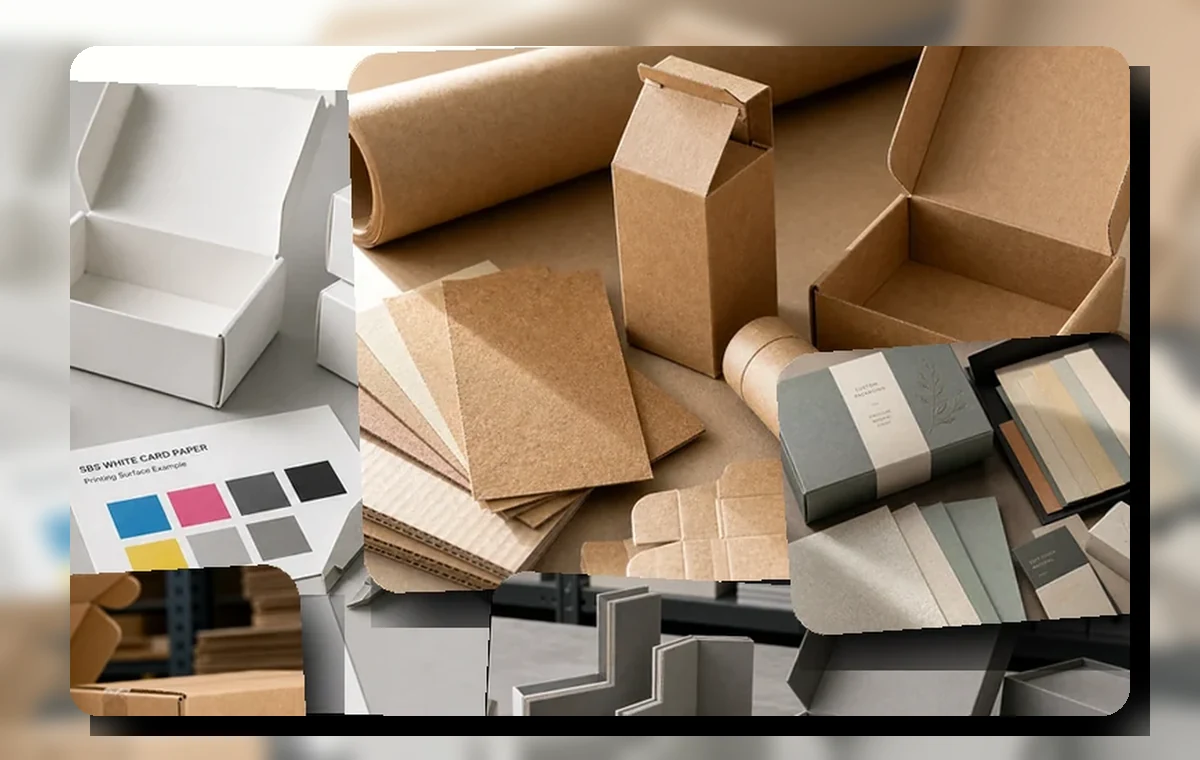
White card paper is the common choice for folding cartons that need clean printing, detailed product information and bright color. It works well for cosmetics, supplements, soap, candles and retail accessories.
Kraft paper
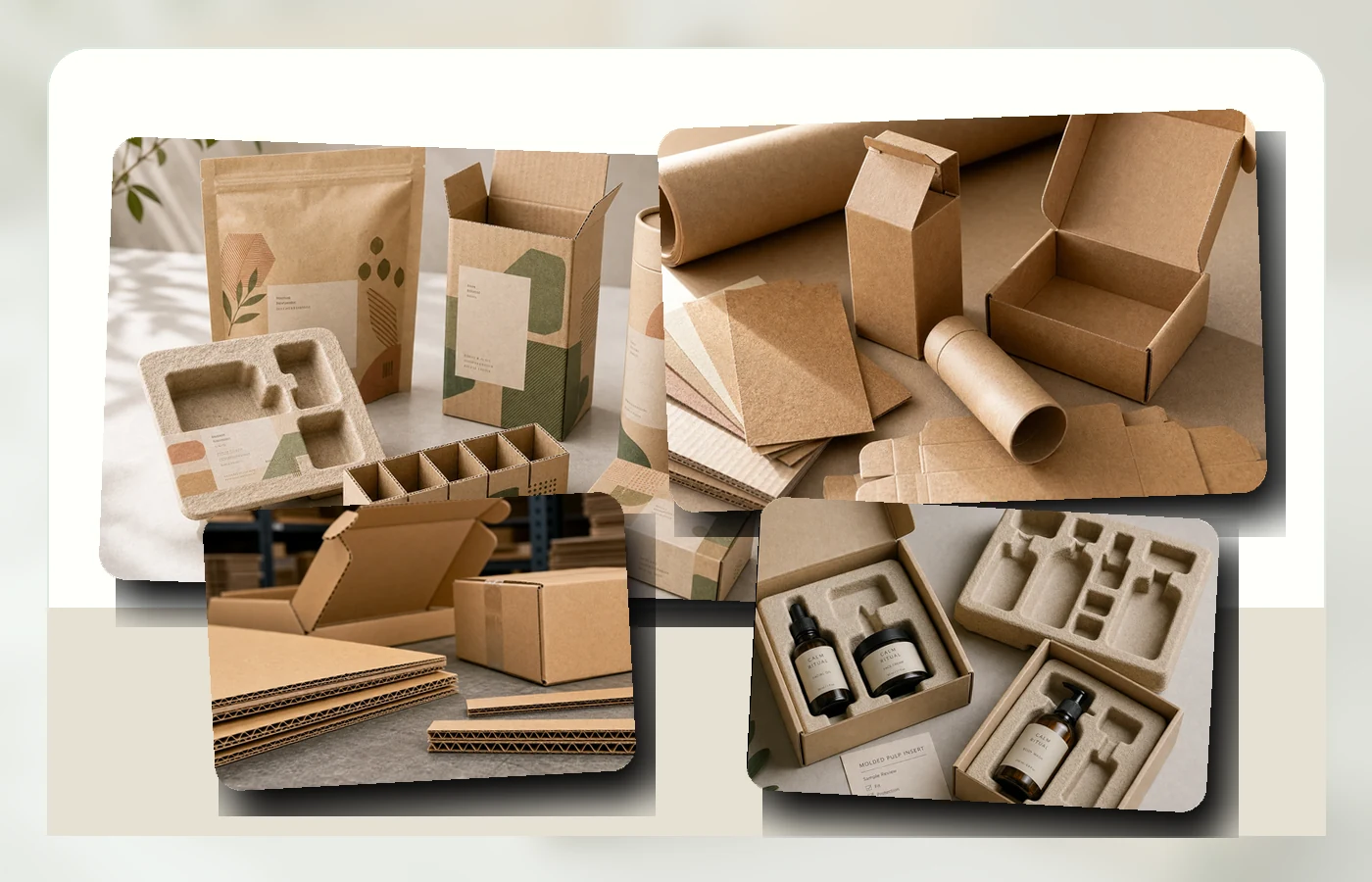
Kraft paper creates a natural and understated feeling. It is strong for simple brand styles, but colors print more muted than on white card. It works best when the design accepts a warmer paper tone.
Corrugated board and grey board
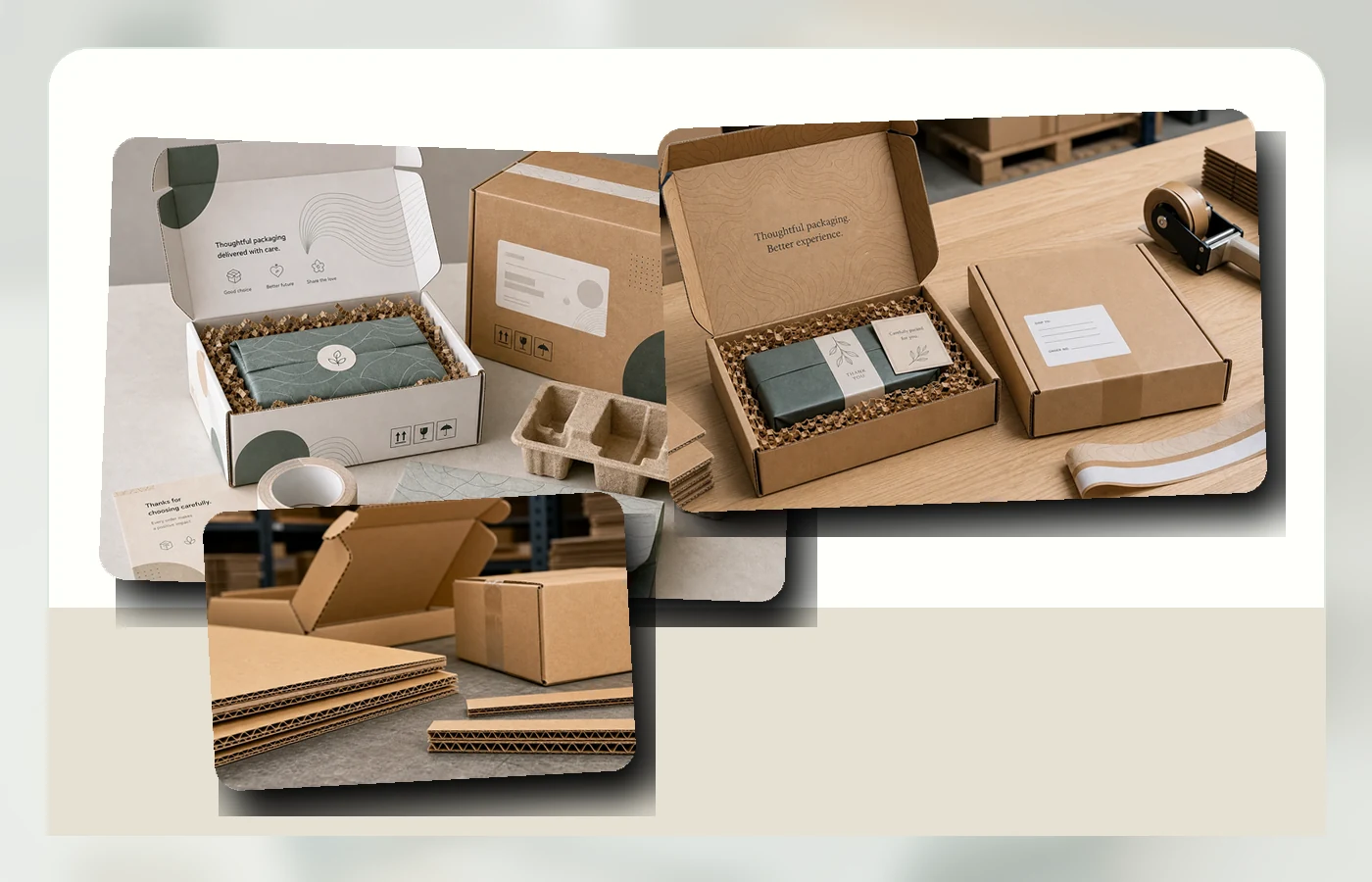
Corrugated board adds fluting for mailers and shipping boxes. Grey board is used as the core of rigid boxes and gives premium structure. Both are stronger than common paperboard but affect cost and freight volume.

Practical recommendation
Choose material with structure, product weight, finish and shipping route together. A beautiful paper can still fail if it does not hold the product or match the printing process.
Suggested next step
Send product size, target quantity, reference images, material preference and shipping destination to Packaverse. We can help compare structures, materials, finishes and sampling options before production.